Category: EDTECH Reflections (Page 1 of 2)

EDCI 336 Final Class

Final Class reflection


For our last class we discussed games in education and did a bit of a wrap up for the course.


I was especially interested in the topic today because it ties in so closely to my free inquiry. I was actually inspired to play Minecraft for my inquiry because it is part of a program for the summer camp I worked for last summer. I was working as a sub for that camp so I didn’t need to know anything about Minecraft but it made me want to try it out. I suppose I was just blown away by the idea that a game this popular could be educational. I wish we could have had the chance to connect with the teacher from Colquitz who runs a Minecraft lab. From what I heard in class they are doing some really interesting stuff with the game. 


We also got together in Google docs to brainstorm games that we have seen and/or experienced in classrooms before. When it was pointed out that these were mostly math games I felt a bit silly for not noticing this before. It makes sense because math (at elementary levels) is an undisputed topic, and probably easy for game companies to deal with translation, internationalization, and localization of these types of game so they can find a larger audience (because profit). 


I like the video that was included in the slides about Minecraft being the ultimate educational tool 


I really think that games in the classroom is going to become more and more common, especially seeing large companies like Google and Microsoft making pushes to get into schools. 


However I do agree with what was said in class about how games are currently used as reflection, review, or practice and maybe not as a teaching tool. There is much more to this topic than what we covered in class and there is a part of me that thinks this will be changing quite a bit during my teaching career. Games in classrooms is definitely something I will be keeping my eye on during my degree and once I start teaching.

Week 11: Distributed Learning Discussion Blog Post

This week in class we talked about blended, online, and multi-access learning environments. Last March when classes went online I was very concerned about  being able to maintain focus in a distance education environment. I have been in a distance ed situation before and was extremely frustrated by it the first time, but I am happy to report that as rocky as the midterm transition was it ended up being okay. In fact, I completely attribute being able to complete four summer courses to the fact that everything was online. The course load was so condensed that I basically woke up, did school work, ate sometimes, then went to bed. That being said, I still prefer face-to-face classes. Lets plot out the pros and cons:


Pros:


Being able to take on more courses than should be humanly possible

  • With no commute and asynchronous classes there is more flexibility in scheduling 


Studying and attending class at home

  • I have a dog with severe separation anxiety so being able to stay with him all day helps his mental and physical wellbeing (he will chew on walls/doors/metal door handles when left alone so the lower vet bills have been nice)


Spending less money on food/coffee 

  • Since there is no travel to class or staying late at school to study overall cost of dining out has gone down.


Breakout rooms 

  • I get a chance to talk to more variety of classmates


Working on Docs

  • Since we are all on computers already it is easier to share a doc and work collaboratively


Cons:


Feeling like it school work never ends

  • There is less of a separation between “school time” and “relaxation time” because the physical space is the same for both activities and there is always more work you can put into an assignment.


Constant headaches

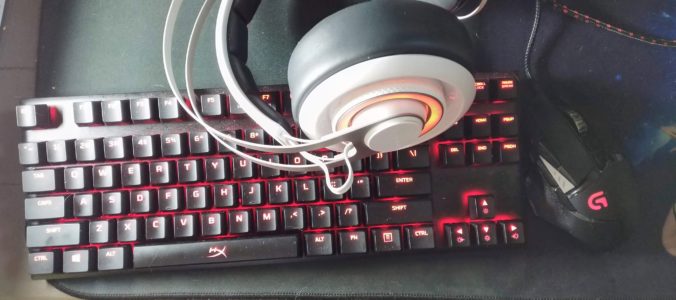
  • Between my eyes being on a screen and my headphones clamping onto my tiny head I have been getting headaches daily at this point in the term.


Focus is easily lost

  • My mind easily wonders in Zoom classes so I’ve gotten a supply of squishy balls/other shapes to keep more focused during classes. 


Forgetting to go outside

  • There are days that I just park myself at a computer and stay there for hours. Thankfully I have a dog that needs walks, so I get reminders but I still miss going out some days.


Missed connections

  • There is less chance to make connections with people over Zoom, this goes for fellow students, teachers, and guest speakers.


Less chance to ask for clarification

  • I find that there are fewer chances to ask for clarification and have more voices in class discussion. There are people who are just less likely to speak up over Zoom. As someone who likes to ask and hear others questions on a subject I am really missing those interactions.


We also touched on Synchronous and Asynchronous learning


For me, and the cost of education, I really like the idea of watching recorded lectures and meeting as a class for more discussion and theory about subjects. I think it is reasonable to ask students to watch a lecture and attend a synchronous class, especially if the lecture and class are manageable time lengths (say 60-90 minutes). 


Overall, I am still not a huge fan of online classes. However I do see how some subjects can still be taught effectively over platforms like Zoom. I really hope that in Fall 2021 we are back to face-to-face, or at least a mix.


Also, the robot person thing looked really cool and I wish we could have seen that in person.

Until next time!

Class reflection for Nov 16th

In class we had a guest speaker, Chantelle, from BC Ed Access. This is a volunteer run organization that helps students with disabilities and their families navigate the BC school system and advocate for equity in BC classrooms. 


After Chantelle did her presentation the class went into breakout rooms with some questions/prompts to guide our conversation. It was really eye opening to hear about other people’s experience in their field experience or in the past with students with disabilities or complex learning needs. I was reflecting that I was surprised about the impact complex learners had in the class I visited and how I was really impressed with how the teacher and EA’s can adapt and accommodate different needs at different parts of the day. The group I was in had a conversation about how to approach parents about issues like this that are noticed by teachers. While none of the group are teachers yet we came up with some tactics like recording everything in a binder, talking with support staff and principals, and asking the students previous teachers as a way to build up a case to help parents when they look for intervention. Chantelle ended up popping into our breakout room for a bit too and we were able to ask her questions about ways that a teacher can help parents with having a child assessed or diagnosed. It is, obviously, a very touchy subject for families but it can make a huge difference in a child’s education because a diagnosis can lead to them receiving the support they need in a classroom.

At the end of class we were given links to watch a couple of videos. The videos are a story of a student in BC who had to advocate for their own education and eventually left the public school system to complete high school at a private school. It was frustrating to hear about, but also inspiring because this student was able to find a way to graduate but I think it highlights the shortcomings of the system and a need for more acceptance of different ways of learning and showing knowledge. 


Here are the videos that were shared in class

Damon Kirsebom, “When People See Me Typing”


And this is the organization that Chantelle and others volunteer and run to support students with disabilities and complex learners and their families

https://bcedaccess.com/

It’s Reading Week!!

It’s reading week! 


No classes Monday-Wednesday this week, so we don’t have a ECDI 336 class to reflect on this week. However, I spent last weekend doing a 24 hour charity event that I streamed so I thought I would reflect on the digital resources I used for that.


Myself and six others pledged to play games, and stream it all, for 24 straight hours last weekend. We started at 3 pm Saturday and ended a little after 3 pm on Sunday. I can truly say that I am amazed that my computer did not melt during the event. I was attending as a player but I was also the “producer” as I was running the stream, monitoring chat, checking and reporting on donations received, and playing a soundscape for the event.


I was trying to think of ways that I could use the digital tools for this event in educational ways so I’ll run through the tools and how they could be used in schools.

Discord – This is what we used for the players videos and audio feeds. It has some similarities to Zoom, but is meant for smaller groups with the bonus that the chat never goes away. Last March one of my profs used this when we switched to online classes and it was good for screen sharing and asking questions (in text or voice chat) it might be better for small classes.


Foundry VTT – This was our solution for our virtual tabletop. This could be interesting to use as a way to add some gamification to a lesson. You can create a map of just about anything and have students roll dice (digitally or in a classroom) for math games. 


Epidemic Sound – This site has hundreds of hours of music available. Yet I don’t know that it would be very useful in a classroom setting with the exception of using it as background music.


OBS Studios – This is a really powerful tool and I have  only scratched the surface of it. I think this would be most useful when creating online or video presentations. You can make different “scenes” and transition between them smoothly. For my purposes I had a starting soon, stream, be right back, video clips, and thank you scenes that I would transition between during the 24 hours. I think this would be great to use for a presentation with scenes for talking heads, slide decks, videos, and displaying websites in a seamless manner. Because OBS Studios will record everything for you the video you create can be uploaded to YouTube or sent directly to teachers and/or students. This software lasted over 24 hours and recorded the whole event! I’m impressed with both it and my computer for being able to handle that, not that anyone needs to record a 24 hours presentation.


That’s all I have to say about this for now.

Until next time!

Class reflection

This class we spent some time in groups exploring different resources for bringing coding into the classroom. I liked the mix of lecture and group activity used today as it gave me information and then time to try out different apps or services. I started off in a group looking at codemonkey, which is a game where you have a selection of movement options (right, left, up, down) to try and get the monkey from where they are standing to a treasure chest on the screen. One arrow is one space of movement so if the money is two steps away from the treasure you need to input “right, right” into the movement before pressing go. The experience is  very beginner level which could work with some grades but the site has the most obnoxious music so that would be something to work around. Some other students seemed to really dislike this site but I could see it used well in primary grades.


Next I went to look at the topic I was most interested in which was the unplugged coding


https://csunplugged.org/en/


I like the idea of introducing a topic and having students interact with something hands on, then linking it with an activity done on a computer or tablet. This site is an amazing resource for lesson plans with printables and, as was mentioned in class, some lesson ideas come with videos of classes working through the activities. They also had cross curricular activities so students can learn the ideas around coding without knowing that the activity is promoting that. The group that I was with all agreed that this is a great resource for teachers on call. Overall I was really impressed with this site and I made sure to bookmark it for future use.


The computer science unplugged website also had activities that bridged into Scratch and Scratch Jr. so I decided to check out Scratch next. It is much more advanced than codemonkey and would require more reading skills. Scratch is made uses blocks of code in the shape of puzzle pieces that can be connected to program animations or games. This tool is something I feel would take much prep time for a teacher/TOC to integrate into their classrooms with purpose. Although I was sure there would be resources on lesson planning with Scratch so I did a google search and one of the other resources we talked about came up
https://www.commonsense.org/education/website/scratch/lesson-plans


I had never heard of Commonsense.org but it sounds like a great resource. I struggle at times to be able to gauge the lever of a grade 2 compared to a grade 4 so I see this coming in handy while I navigate the first few years of my teaching career. 


Al in all I was really happy to spend time playing around with the suggested apps/websites today and talk with other students about what we liked or didn’t like about them.


Until next time!

Seventh week reflection

For this week’s class, a large amount of class time was spent in discussion groups. The groups were created using topic suggestions from students and then a vote to see which 5 subjects had the most interest. We were encouraged to change rooms and get involved in the conversation which was a bit awkward because I had to ask to change rooms but I’m happy that I was able to move around as much as I did. It was interesting to see how many people gravitate to certain topics. I was in a room with 8 people at one point, and the next room I went into only has 2 other people in it. I don’t often participate in a situation where there is a free flow between groups so you are free to visit any of the groups at any time. It was a really great exercise and since each group made a list of points that were discussed the class has a document to reference and some resource suggestions from Michael. One resource lead me to Trevor Mackenzie’s website where I read several of his posts about implementing inquiry and a Google slide presentation that made some good points on parts of the inquiry process. For example, in the slides Trevor points out that when you are using inquiry with a class students come up with questions about their inquiry project but teachers need to find ways to tie those questions to curriculum and learning standards.
We had some great take aways from this weeks class, but I find myself saying that for all the classes I am in right now.

With some guidance from Michael I have been looking more into using OBS and Twitch as a solution to streaming the charity event on Nov 7. After doing a bit more research I think OBS will be the best for having the video, audio, and customization I am looking for. I did a quick set up to see how much time it would take to set up and it was fairly easy. Now I have to create some templates for the different scenes I will be switching between during the stream. I will be using PhotoShop to make those templates but that is a story for another day.


Until next time!

Sixth Week Class Reflection

Part of our to-do list for class this week was to watch some videos taken at the Pacific School of Innovation and Inquiry (PSII). I was really interested in hearing about a school in Victoria that focused on inquiry based learning and teaching critical thinking. Hearing Jeff Hopkins talk about the way that students interact with other students and teachers at the school seemed so forign to me. It’s hard for me to think about running a class at an inquiry based school while trying to make sure students hit the milestones set out for them. The material got me wondering how teachers find themselves teaching at this sort of school. Maybe they have experience with inquiry learning, or teaching or maybe they see traditional classrooms not working and want to be part of the transition to a better system. Are the current teachers at inquiry schools the early adopters of the new way we educate Canadians or is this one step of many in education reform? 

We are almost a third of the way through this term and I feel like my days are flying by. With the time moving so quickly I am happy to be recording my journey in writing. I think this will be a great resource later when I am trying to remember some content that we have covered.

Until next time! 

Fifth week reflection and Minecraft update

Fifth week reflection and Minecraft update


There was no class in week five because of the long weekend so I took this time to start exploring some streaming software. I have been involved with the charity Extra Life for the past few years by helping my partner set up their in the person event. The two of us have typically been part of a bigger team that run various games for the 24 charity marathon but like most things this year it is going to be a bit different. This year instead of auctioning off seats at the game table and having a sort of revolving door of players there will only be 7 people playing for the entire 24 hours. In previous years we have streamed the 24 event with an extremely simple set up of one webcam and two microphones because all participants were in the same room. However, this year five people will be in different locations and two will be in the same room. The two people in the same room will each have their own camera and audio feed. To bring this all together I decided to use OBS as our streaming software since it is easy to connect it to Twitch, where the game will be streamed, and OSB has robust features with, what I hope will be, easy to manage menus. I have no experience using OBS but from the tutorials I have looked at it should be a great solution for the stream. 
 

For Minecraft this week I spent most of my time mining and trying to find iron, gold, diamonds, or any other materials hidden in the earth. I decided to just start digging down in a random spot and ended up finding a few pockets of usable materials. Eventually I hit an area where I couldn’t break any more of the blocks, no matter which pickaxe I tried to use on the blocks. I suppose I hit the lowest layer? 


As this is a short update I’ll leave it here for now.


Until next time!

Fourth Week Reflection

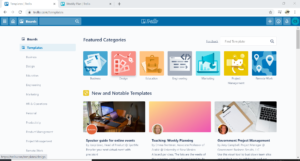
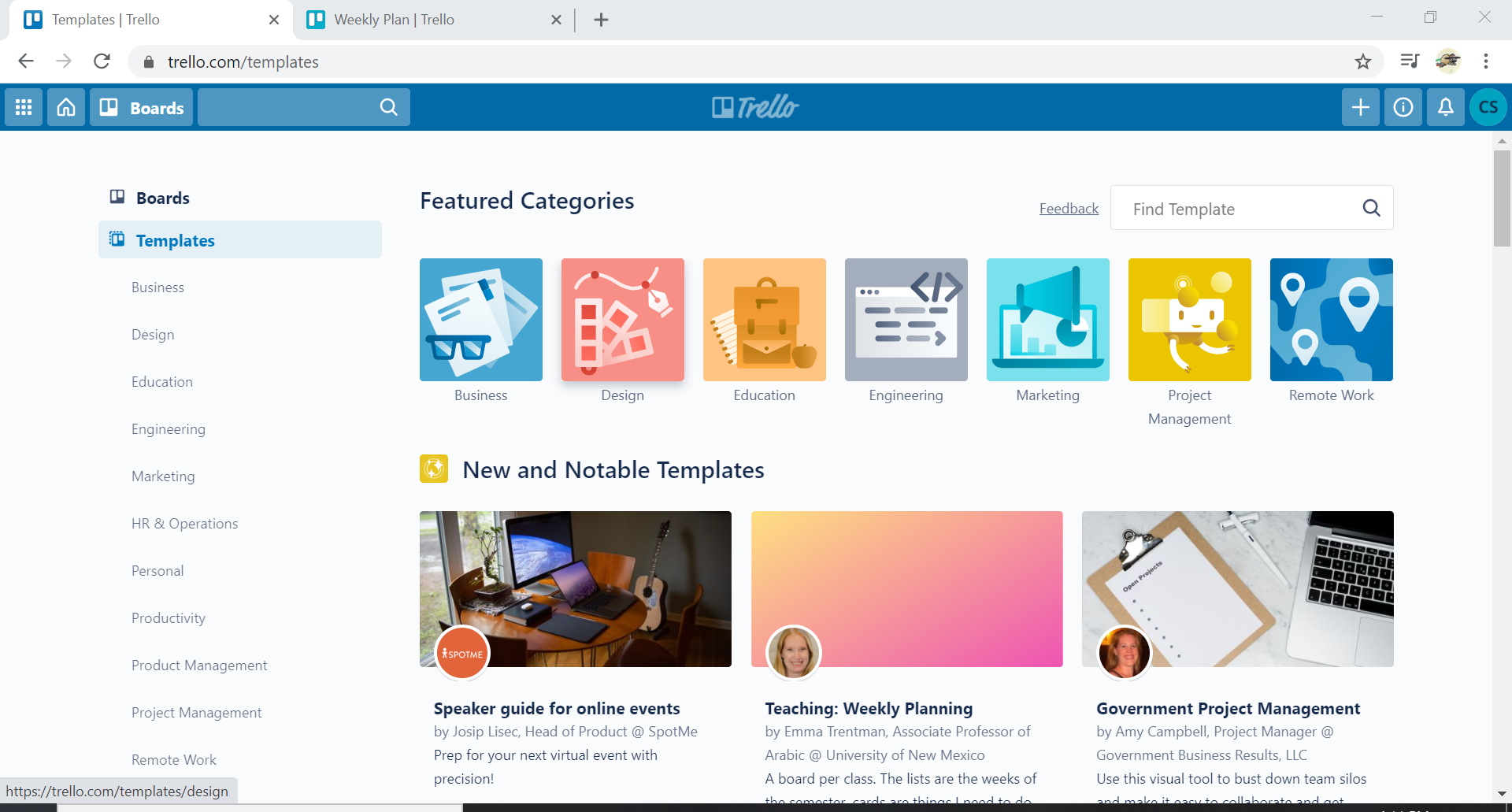
This week I decided to look into using Trello. We had talked about this app in class and I was intrigued because I am always looking at ways to schedule myself or groups more efficiently. At first Trello looked  like Padlet, which I was using frequently in the summer for work. I used Padlet to work on weekly camp schedules and activities with my coworkers so we could both add in ideas where we thought they would fit best. However, after working in both apps I can see how much more powerful Trello is. 


Details Details Details!
I was impressed with how much this app allows you to edit in a single ‘card’. For instance, you might have a card labeled “English 201 Essay” but you can click into that card and add a more detailed description, a checklist, a due date, or assign that card to a member of a team you are working with. You can also assign colours (Trello also includes colour blind options) to cards, so you could make all your biology assignments appear blue, but those cards will turn red if not completed by the due date you assigned them. Although I wish they applied a traffic light system to the due date so you get a warning, yellow colour change, when you are 24hrs from a due date.


I was roaming the internet looking for helpful board templates and wow is there a bunch available out there! I love being able to try out different systems because I am able to see what I like best from a variety of sources and then merge them into something that I like working with. Trello boards are no different, so I’ll be copying some of the boards I have found to see what works for me.

If you want to copy some free Trello boards here is a video of how to copy a Trello board. 


I found the Trello boards in the above video through this YouTube account.

Until next time!

Third week reflection

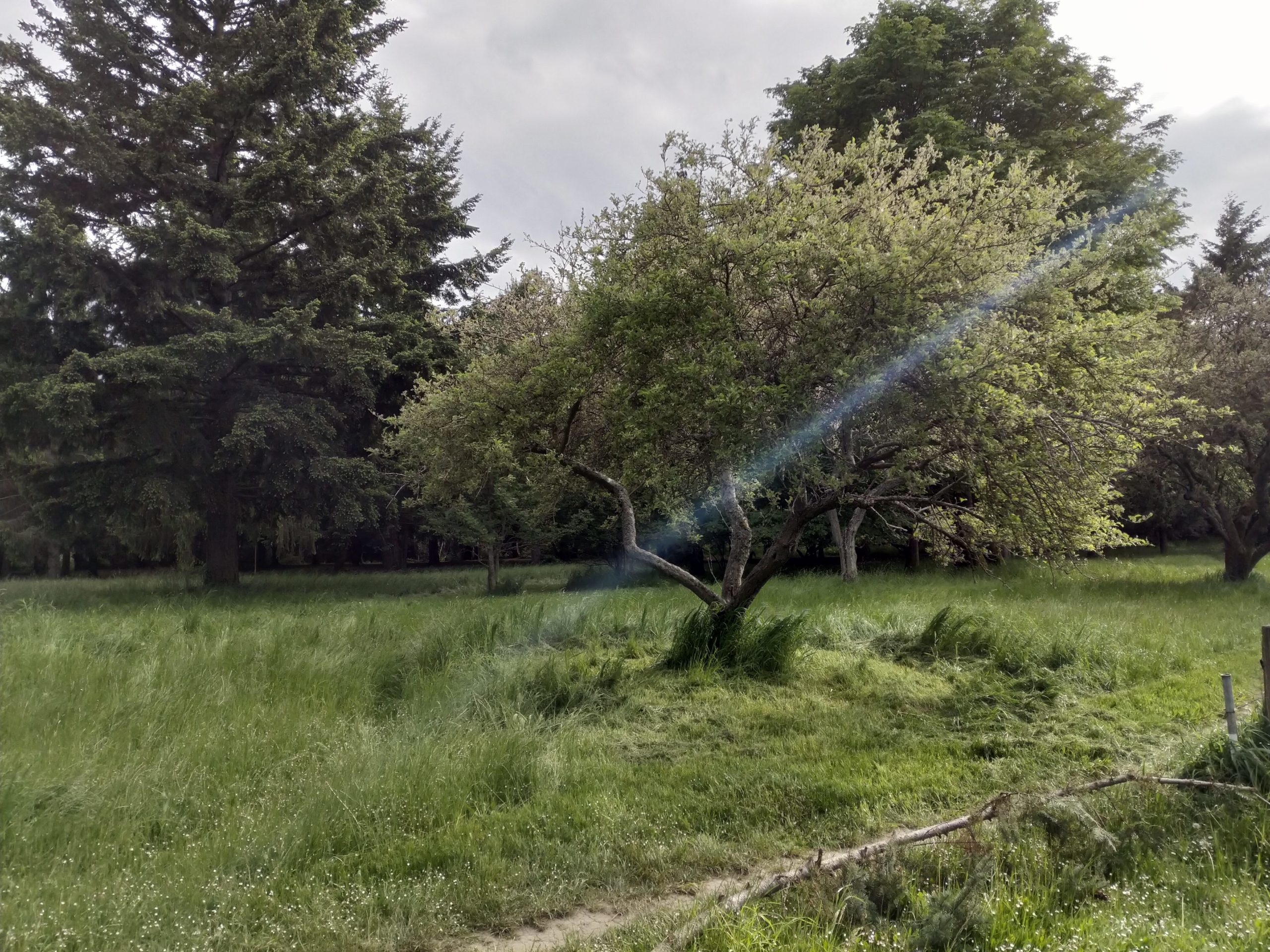
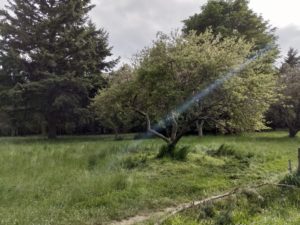
Photo of tree in field

Photo Taken By Carla Scott

This week we took a break from a typical class and had guest speaker Jesse Miller join us. Their presentation was about social media in education, and safety concerts around that. Miller was also speaking to broader digital identity, rights, and literacy among students and school staff members. 

It was a great presentation partially because I had never really spent time to really think about topics they brought up, like how schools handle cell phone policies. I supposed I aged myself a bit by saying that, but when I was in secondary school students having cell phones was very rare. Having never been on the receiving end of this debate the idea of cell phones being confined to bags all class never bothered me. When Miller talked about teachers including a phone break in class it made me think of all the times when I’m feeling stuck, or can’t focus so I check my phone or watch a couple quick YouTube videos to have a sort of brain break. There are also times where I am on a roll and head down for long periods of time, but I think using timed breaks can really help maintain focus. There have been many times where I am dreading the start of a project because I foresee it taking X amount of time and its really daunting, or I don’t even know where to start. When starting is the hardest part I try thinking “I’ll just try for 20 mins and then take a break” I’m not sure why the promise of a break has this effect on me but it can be really amazing what is produced in that time. That was a bit of a long explanation but I think what I am trying to say is the promise of “free time”, even 5 or 10 minutes, can be really motivating.
I was also really interested in the conversation about boundaries and expectations being a way to empower students. I think this is a great idea and I’ve used a similar technique at summer camps with children. We set up “camp rules” that we make as a group so everyone has a say in what we want to put into and see from campers and leaders. This activity always results in more community accountability as the children seem to feel more like they are an important member and decision maker rather than a person that has to follow a list of boring rules made up by the leaders.
Now, I’m off to play some more Minecraft!

« Older posts